Georg Vetter

Data Scientist
View my Medium Profile
Tiny Simulations in Python
Projects
Kikeriki Game-Simulation Study

This project analysed the statistical fairness of the children’s game KIKERIKI using Monte Carlo simulations across different rule variants, player counts, and numbers of cards. The results showed no significant advantage from starting position, turn order, or house rules, with fewer than 1% of tested scenarios showing random deviations. Overall, the game proved to be highly balanced, robust, and fair while remaining engaging for players of all ages.

Read more

Traffic Jam Simulation in Pygame

This project is a traffic jam simulation built with Pygame, where cars drive on a circular track. The user can adjust parameters such as the number of vehicles, acceleration, and braking distance through a graphical interface. The simulation then visualizes the movement of cars, calculates minimum, maximum, and average speeds, and demonstrates how certain settings can lead to traffic congestion.
Read more
Solving n-Queens Problem with Genetic Algorithm
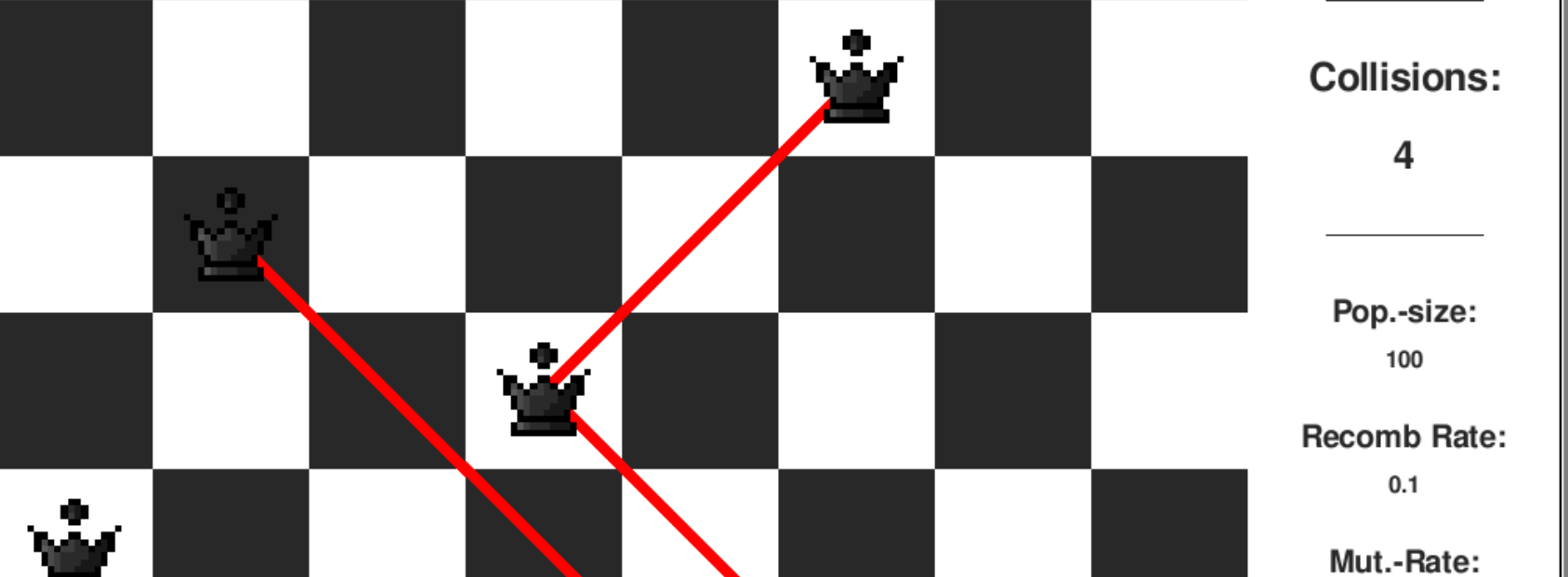
This project successfully applied Genetic Algorithms to solve the N-Queens problem, demonstrating their ability to optimize complex configurations while minimizing conflicts. The accompanying visualization, developed with pygame, effectively illustrates the algorithm’s processes and highlights its educational and practical value.

Read more

Bully in the Playground
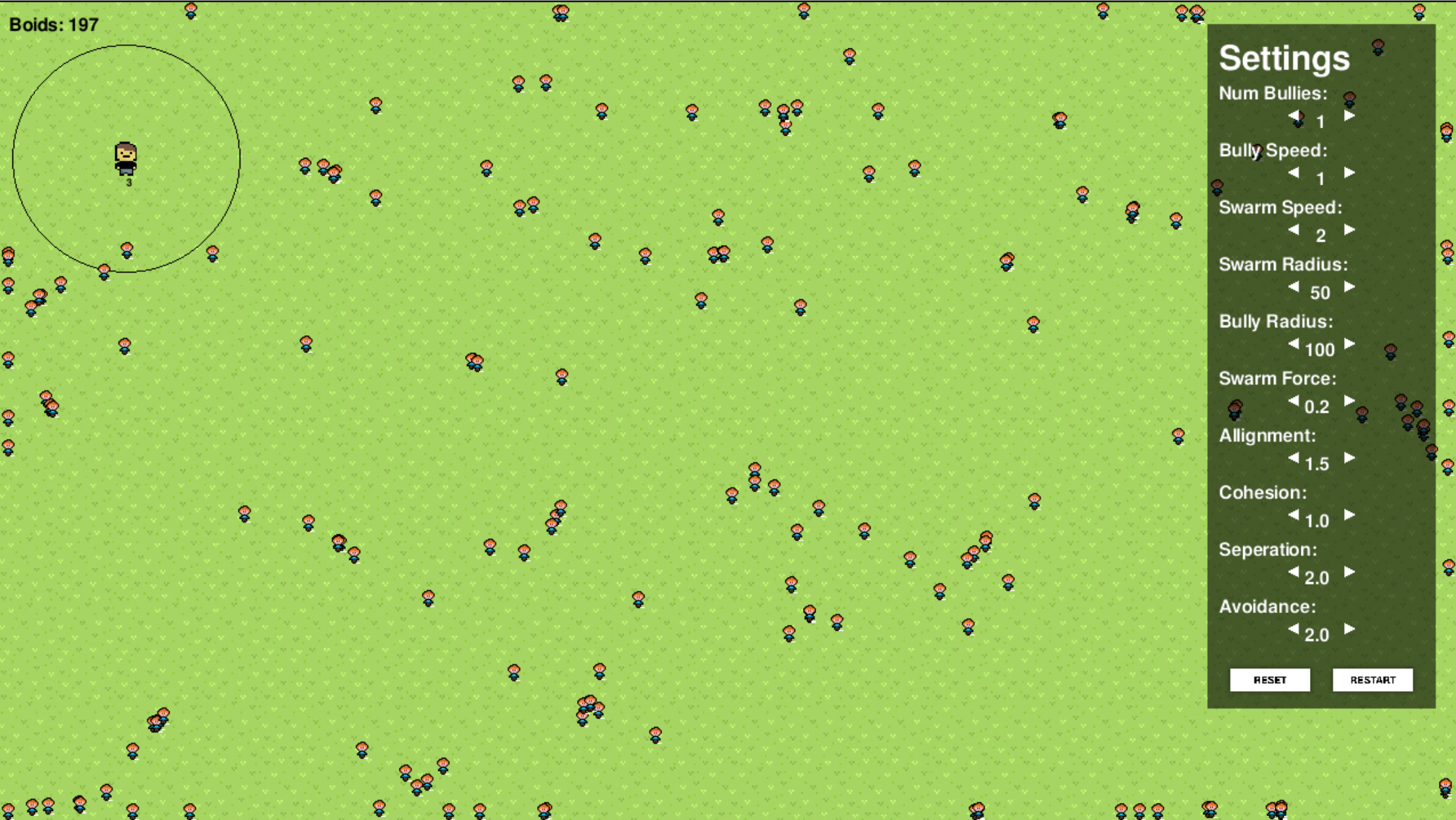
The “Bully in the Playground” model demonstrates how predator-prey dynamics and swarm behavior can emerge from just a few simple local rules. By adjusting parameters like speed, cohesion, separation, and avoidance, entirely different movement patterns appear—ranging from stable flocks to chaotic dispersal. This makes the model a powerful playground to explore emergent systems, multi-agent dynamics, and potential real-world applications.
Read more