Georg Vetter

Data Scientist
View my Medium Profile
Portfolio
Projects
Tiny Simulations in Python
The project series “Tiny Simulations in Python” consists of a collection of small, engaging simulations developed with Python. Each simulation is designed to illustrate a specific concept or technique from the fields of physics, biology, mathematics, and/or complex systems. Every project is accompanied by a blog post documenting the design and implementation process, aiming to reflect on the results and share knowledge.
Read more
Tiny Games in Python

The project series “Tiny Games in Python” consists of a collection of small, creative games developed with Python and Pygame. Each game is designed to demonstrate a specific concept or technique from the fields of game development, artificial intelligence, and/or interactive user experience. In addition, each project is documented in an accompanying blog post to reflect on the development process and share knowledge.
Read more
Pokémon Clustering
.png)
In this project I used my Typo Generator to create typos in Pokémon names. I then clustered the noisy Pokémon names with an ensemble clustering consisting of different similarity measures. The method is modularly variable and achieves a very good F1-Score of over .90. The visualisation of the clusters can be viewed below.



Read more
Typo Generator

To train a cluster algorithm, I needed data that was already clustered, in the form that the data points represent different spellings of a word to which they are assigned as a cluster. This allows me to check whether my cluster algorithm works well and to better optimise the hyperparameters. However, the use of a typo generator can also be interesting in many other areas.
Read more
t-SNE Visualization
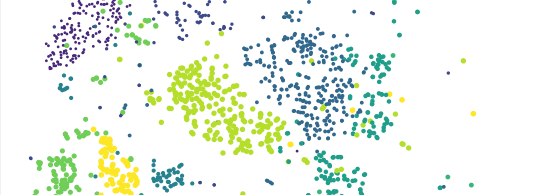
The project investigated visualizing high-dimensional data from the MNIST dataset using the t-SNE algorithm, preserving similarity between data points. Data was loaded from MNIST, then t-SNE applied to generate coordinates for a scatterplot, with each digit class represented by a distinct color. Results demonstrated clear clustering and separation between digit classes, suggesting t-SNE’s efficacy for visualizing MNIST.

Read more
Judge a Book by its Color
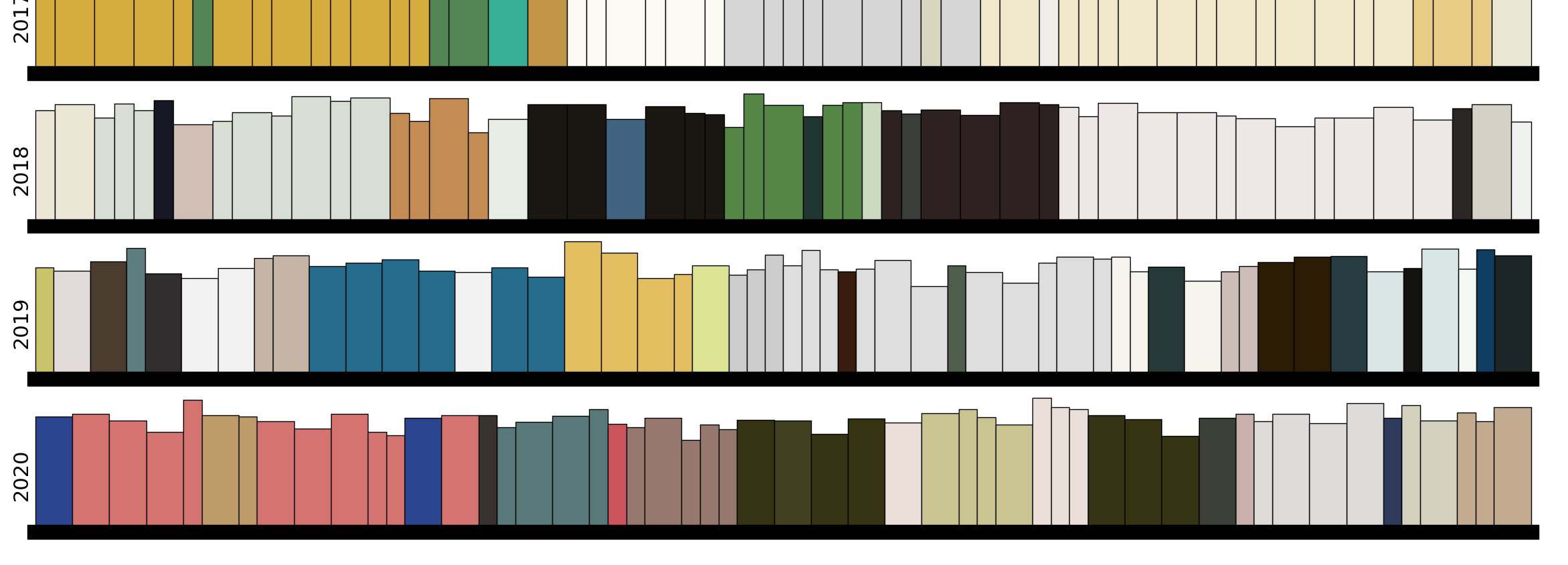
This project analyzed the main colors of bestsellers over decades, aiming to identify dominant trends and visualize them effectively. Data from book titles, authors, and top-ranking periods were sourced from Wikipedia, while book covers were scraped from online sources. Through this analysis and visualization, valuable insights were gained into book cover design trends, providing a basis for further exploration in the field of book market analysis.
Read more
Publications
2024
Vetter, Georg (2024): Manufacturer Name Clustering. Kaggle. https://kaggle.com/competitions/manufacturer-name-clustering
Aguirre Reid, Sören; Vetter, Georg; Lackes, Richard; Siepermann, Markus (2024): Is it all about fun? Self-service technology acceptance in Germany. The International Review of Retail, Distribution and Consumer Research, 34(2), 201–227. DOI: 10.1080/09593969.2024.2342795.
2023
Aguirre Reid, Sören; Lackes, Richard; Siepermann, Markus; Vetter, Georg; Wenner, Wladimir (2023): Oral Examinations Simulator – An Intelligent Tutoring Tool to Reduce Oral Exam Anxiety. In: Dondio, P., et al. Games and Learning Alliance. GALA 2023. Lecture Notes in Computer Science, vol 14475. Springer, Cham., p. 438–443 DOI: 10.1007/978-3-031-49065-1_46.
2020
Beser, Alper; Lackes, Richard; Siepermann, Markus; Vetter, Georg (2020): How Firms should respond to negative Word-Of-Mouth. In: Proceedings of the 28th European Conference on Information Systems (ECIS). available online at AIS.
Lackes, Richard; Siepermann, Markus; Vetter, Georg (2020): Where can I take You? - The Drivers of Autonomous Driving Adoption. In: Proceedings of the 28th European Conference on Information Systems (ECIS). available online at AIS.
Lackes, Richard; Siepermann, Markus; Vetter, Georg (2020): What drives decision makers to follow or ignore forecasting tools - A game based analysis. In: Journal of Business Research 106, p. 315–322. DOI: 10.1016/j.jbusres.2019.02.036.
2019
Lackes, Richard; Siepermann, Markus; Vetter, Georg (2019): Can I Help You? – The Acceptance of Intelligent Personal Assistants. In: Pańkowska und Gerstner (Hg.): Perspectives in Business Informatics Research, Bd. 365. 1st ed.: Springer International Publishing (Lecture Notes in Business Information Processing), p. 204–218.
Vetter, Georg (2019): The Adoption of Smart Systems - Influencing Factors of the Intention to Use and Actual Use. Dissertation, Technische Universität Dortmund. DOI: 10.17877/DE290R-20092
2018
Vetter, Georg; Siepermann, Markus; Lackes, Richard (2018): What Drives Decision Makers to Follow or Ignore Forecasting Tools - A Game Based Analysis. In: Tung Bui (Hg.): Proceedings of the 51st Hawaii International Conference on System Sciences.
Lackes, Richard; Siepermann, Markus; Vetter, Georg (2018): Turn it on! - User Acceptance of Direct Load Control and Load Shifting of Home Appliances. In: Proceedings of the 26th European Conference on Information Systems (ECIS). available online at AIS
2017
Lackes, Richard; Siepermann, Markus; Vetter, Georg (2017): The Effect of Uncertainty and Quality Perception on the Usage of Forecasting Tools – A Game Based Analysis. In: Dias (Hg.): Games and Learning Alliance, Bd. 10653. 1st ed.: Springer International Publishing (Lecture Notes in Computer Science), p. 228–237.